Dr. Ceballos Dual Board-Certified Orthopedic Surgeon & Sports Medicine Specialist
I’ve spent my career treating joints, tendons, and cartilage as structures first things that fail mechanically before they fail biologically. Stem cell and cellular therapy doesn’t change that philosophy. It gives me another tool to support the biology once the structural picture is clear.
Florida law changed in 2025. For the first time, I can offer stem cell therapy legally, transparently, and under my own direct oversight not through a franchise model, not through a med spa, and not disconnected from the surgical judgment that got me here. This page explains what these therapies actually are, how I deliver them, and where they fit into a real orthopedic strategy.

Bone Marrow Aspirate Concentrate is drawn from your own bone marrow, typically the pelvis, and concentrated in the same visit to isolate the cellular and growth-factor components most relevant to tissue repair. Because it’s autologous your own tissue, used on you it carries a different risk and regulatory profile than a donor-derived product. I use BMAC selectively, for joints, tendons, and bone that may benefit from a more concentrated biologic signal than PRP alone provides.

The primary cellular product I use is Wharton’s Jelly-derived mesenchymal stem cells (MSCs) a donor-derived, allogeneic cellular therapy. MSCs are studied for their anti-inflammatory signaling, tissue-repair recruitment, and immunomodulatory activity at the cellular level. I’m careful with that language on purpose: this is promising science, not a guaranteed outcome, and I tell every patient that directly before treatment.

The product I use is derived from Wharton’s Jelly the connective tissue inside the umbilical cord. It’s sourced from ethically consented donations after healthy live births, processed in FDA-registered, cGMP-compliant labs, and comes with lot-specific documentation and a full chain of custody. I don’t work with suppliers who can’t show me that paperwork. These are not embryonic stem cells, and embryonic stem cell use isn’t legal in Florida in the first place.

Beyond BMAC and Wharton’s Jelly-derived MSCs, the broader category of cellular and tissue-based orthobiologics includes other perinatal and connective-tissue-derived products. I evaluate any product I use against the same standard: documented composition, verified viability, a clear regulatory classification, and supplier documentation I can produce on request. If a product doesn’t meet that bar, I don’t use it regardless of how it’s marketed elsewhere.
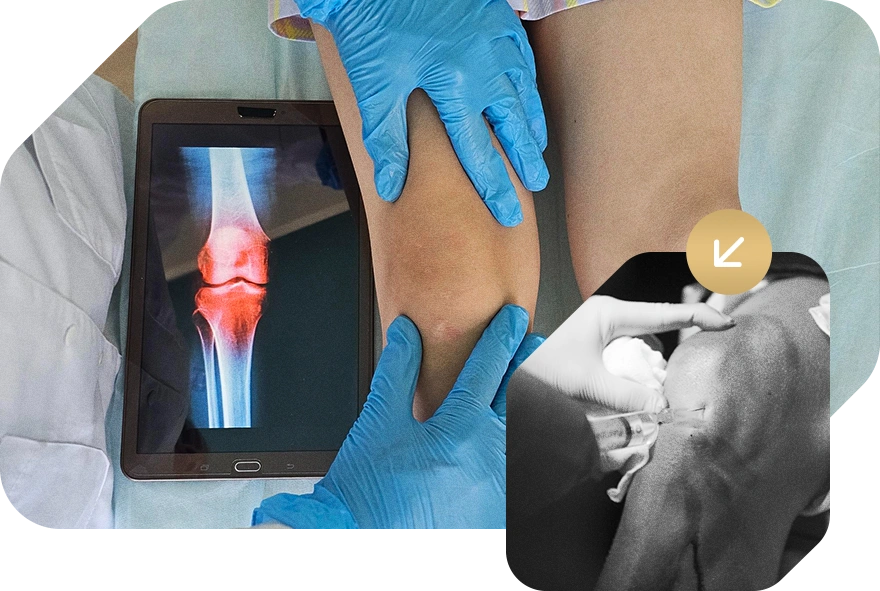
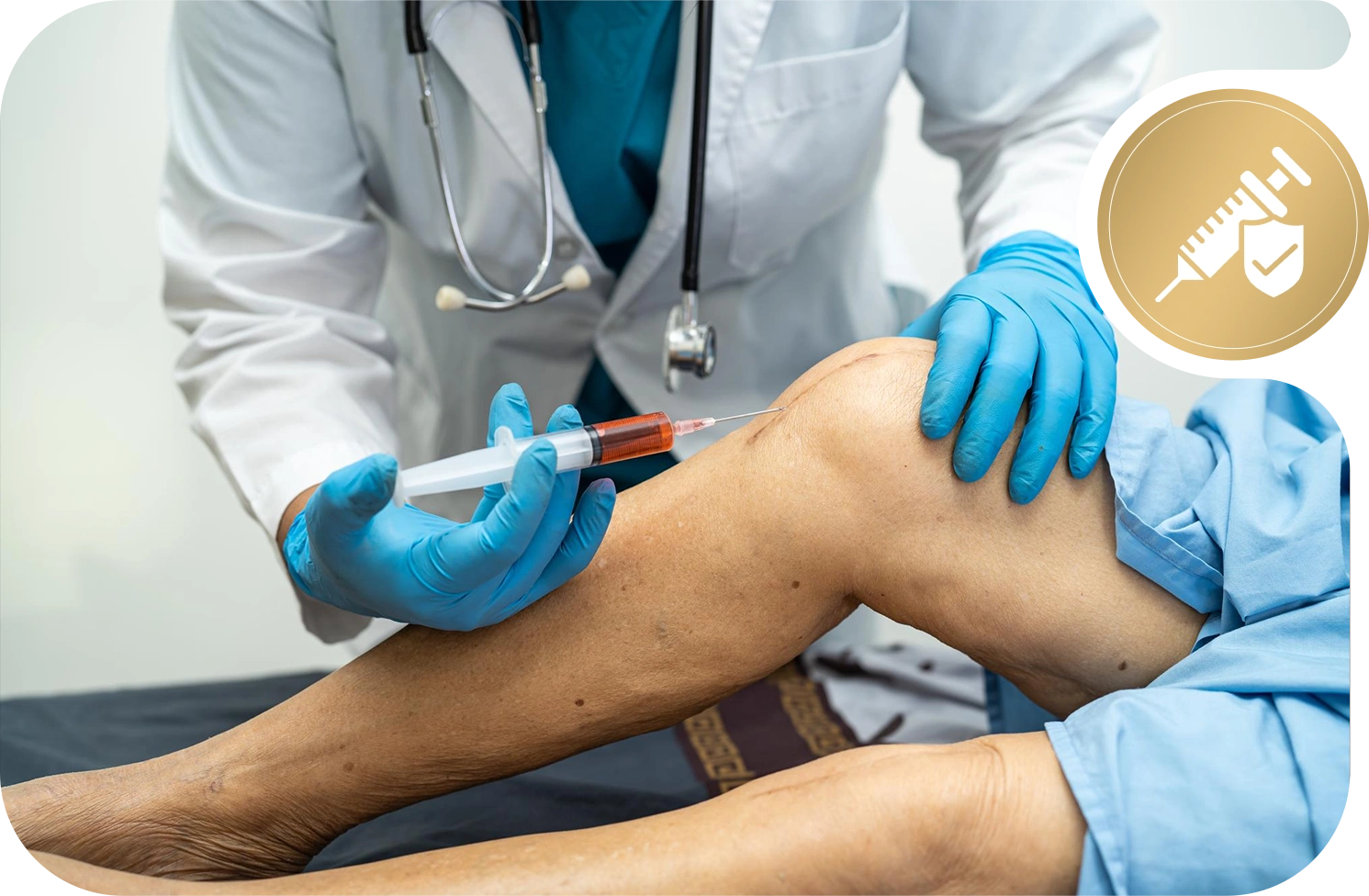
Most of the cellular therapy I perform is delivered directly to the problem into a joint, tendon, or ligament under ultrasound or, when indicated, fluoroscopic guidance. For select patients with bone marrow lesions or subchondral bone involvement, I deliver cellular therapy intraosseously, directly into the bone, rather than into the joint space alone. The choice between the two or a combination of both depends on where the imaging and evaluation show the pathology actually is.
Wharton’s Jelly contains mesenchymal stem cells, extracellular matrix components, and cytokines involved in the body’s repair signaling. Every lot I use comes from ethically consented donations after healthy live births, processed in FDA-registered, cGMP-compliant labs, with documentation I review before it’s used on any patient. I’ll walk you through exactly what’s in the product you’re being offered not just the marketing name attached to it.

BMAC is autologous it comes from your own body. The Wharton’s Jelly product I use is allogeneic, meaning it comes from a donor source, processed under strict lab and sourcing standards. Both are legitimate cellular therapies, but they carry different considerations around risk, regulatory classification, and expected biologic behavior. I’ll walk you through which one, if either, makes sense for your case.

Stem cell and cellular therapy is not FDA-approved for the treatment of any specific disease or medical condition. The FDA has not evaluated these therapies for safety or efficacy. They are investigational and are not intended to diagnose, treat, cure, or prevent any disease. Every patient receives this disclosure in writing, along with a documented discussion of risks, alternatives, and standard-of-care options, before treatment.

The published research on mesenchymal stem cells describes anti-inflammatory signaling, tissue-repair recruitment, and immunomodulatory activity at the cellular level a genuine and active area of orthopedic research. That said, the evidence base is still developing, results vary meaningfully between patients, and no cellular therapy can currently guarantee tissue regeneration or a specific clinical outcome. I discuss the actual state of the evidence for your specific condition, not a general promise of what “stem cells” can do.

As with any injection-based procedure, risks include infection, bleeding, injection-site reaction, and lack of clinical improvement. Because these are investigational therapies, longer-term risks are less established than for standard-of-care treatments. Alternatives including PRP, BMAC, structured rehabilitation, and, when genuinely indicated, surgery are discussed with every patient before a cellular therapy plan is finalized, so the decision is made with the full picture, not in isolation.

Every patient receives a full orthopedic evaluation and imaging review to confirm candidacy before cellular therapy is offered. Not every patient who asks for this is a candidate. If a joint is too structurally advanced for biologic support to help meaningfully, I’ll say so directly, and we’ll talk about what will actually help including surgery, if that’s genuinely the better answer.

Individual results with stem cell and cellular therapy vary and cannot be guaranteed. No specific outcome, degree of tissue regeneration, or recovery timeline is promised as part of treatment. Every patient receives this in writing as part of informed consent, alongside the FDA and Florida-required disclosures, before any treatment is performed.
Senate Bill 1768 (2025) | Sections 458.3245 & 459.0127, Florida Statutes
Stem cell therapy in my practice is offered strictly within the categories Florida law permits: orthopedic conditions, musculoskeletal pain, and wound care. Nothing systemic, neurologic, autoimmune, metabolic, or anti-aging is offered under this authority, regardless of how it’s marketed elsewhere.
Physician-supervised IV stem cell infusion is something I offer to a smaller group of patients, and only within the same legal boundaries orthopedic conditions, musculoskeletal pain, and wound care. I don’t offer it as a wellness or anti-aging infusion, and I won’t frame it that way even if that’s what brings someone through the door. When appropriate, infusions are done in-office, under direct supervision, with vital signs monitored throughout and an observation period before you leave. Typical infusion time runs 30 to 60 minutes.

South Florida has no shortage of places offering stem cell injections. Very few of them are run by someone who is also a practicing orthopedic surgeon and a pioneer in needle arthroscopy and joint preservation. That matters, because the decision of whether biology alone is enough or whether you need structural correction first isn’t a decision an injection clinic is equipped to make. I make it, because I do both.

Stem cell therapy is not FDA-approved for the treatment of any specific disease or medical condition. The FDA has not evaluated this therapy for safety or efficacy. It is investigational and is not intended to diagnose, treat, cure, or prevent any disease. Individual results vary and cannot be guaranteed. A physician-patient relationship is established only after consultation and informed consent.
Yes, within specific limits. Senate Bill 1768, effective 2025, lets me offer certain non-FDA-approved stem cell therapies for orthopedic conditions, musculoskeletal pain, and wound care. It doesn’t authorize systemic, neurologic, autoimmune, metabolic, or anti-aging use, and I don’t offer it for those purposes.
Wharton’s Jelly-derived mesenchymal stem cells, sourced from ethically donated umbilical cord tissue after healthy live births. These are not embryonic stem cells, and embryonic stem cell use isn’t legal in Florida in the first place.
BMAC comes from your own bone marrow it’s autologous. The Wharton’s Jelly product I use is allogeneic, meaning it comes from a donor source, processed under strict lab and sourcing standards. Both are cellular therapies, but they’re different products with different considerations, and I’ll walk you through which one, if either, makes sense for your case.
For select patients, yes but only within the same legal categories: orthopedic conditions, pain, and wound care. IV infusion isn’t a shortcut to a broader wellness effect, and I won’t present it that way.
For some patients with early-to-moderate degeneration, it may help delay that conversation. For patients with advanced structural damage, it typically won’t, and I’ll tell you honestly where you fall on that spectrum after a real evaluation.
No. Stem cell therapy is investigational and not FDA-approved for any specific condition. I disclose that in writing before any treatment, along with your other options.
No. What I offer is orthopedic stem cell therapy directed at a specific joint, tendon, or ligament finding on your evaluation and imaging the same standard I apply to every patient, regardless of age. I don’t offer this as a general wellness, anti-aging, or longevity treatment, and Florida law doesn’t permit it to be marketed or provided that way.