Dr. Ceballos Dual Board-Certified Orthopedic Surgeon & Sports Medicine Specialist
PRP is the most established orthobiologic I offer, and the one I use most often but the term covers a wide range of actual products. Platelet dose, leukocyte composition, plasma volume, preparation method, the diagnosis being treated, and the accuracy of the injection itself all affect whether a given PRP treatment actually works. A lot of what’s marketed as PRP is prepared and dosed the same way for every patient and every condition. That’s not how I use it.
Every PRP treatment I perform starts with a specific diagnosis and a specific tissue target, and the preparation is matched to that a tendon gets a different formulation than an osteoarthritic knee. This page walks through how I personalize PRP, the conditions I use it for, and what to expect from treatment.

Platelet concentration, leukocyte content, and injectate volume aren’t interchangeable settings they change how PRP behaves in different tissues. Higher leukocyte concentrations may be appropriate for some tendon conditions and are typically avoided intra-articularly. Volume and platelet dose are adjusted for joint size and the extent of the pathology. I select the preparation for your diagnosis, not a single default protocol applied to every patient who asks for “a PRP shot.”

For early-to-moderate osteoarthritis and select cartilage injuries, PRP is used to support the joint’s own healing and anti-inflammatory environment. This is most effective earlier in the disease process, before cartilage loss is advanced part of why an accurate, image-based diagnosis comes before any injection is planned. PRP for arthritis is delivered intra-articularly and, in select cases, combined with an intraosseous approach for a more complete treatment of the joint.

Tendinopathy and partial ligament injuries are among the conditions with the strongest evidence base for PRP. Chronic tendon conditions lateral epicondylitis, patellar tendinopathy, Achilles tendinopathy, rotator cuff tendinopathy and select ligament injuries, including UCL sprains, are treated with a formulation and injection technique suited to that specific tissue, guided by ultrasound to ensure accurate placement within the affected structure.

Muscle strains and tears, particularly in athletes who need a structured return-to-play timeline, can benefit from PRP applied directly to the site of injury to support the healing process during early recovery. As with every other application, this is used selectively based on the grade and location of the injury rather than as a default treatment for every strain.

PRP can be delivered directly into a joint space or, for select patients with bone marrow lesions or subchondral bone involvement, into the bone itself under image guidance. Intraosseous PRP addresses a source of joint pain that intra-articular injection alone doesn’t reach the two approaches are often used together for patients with more advanced degenerative changes.
PRP isn’t only an injection-room treatment. During surgical repair or reconstruction, I can apply PRP directly to the repaired tissue tendon, ligament, or cartilage to support the biologic healing environment during the critical early postoperative period. This is a case-by-case decision made based on what the surgery itself shows.

I don’t perform blind PRP injections. Every injection is placed under ultrasound guidance or, for deeper or more technically demanding targets, fluoroscopic guidance so the preparation actually reaches the tissue it’s meant to treat. Injection accuracy is one of the most overlooked variables in whether PRP works, and it’s treated as a fixed part of the procedure here, not an upgrade.
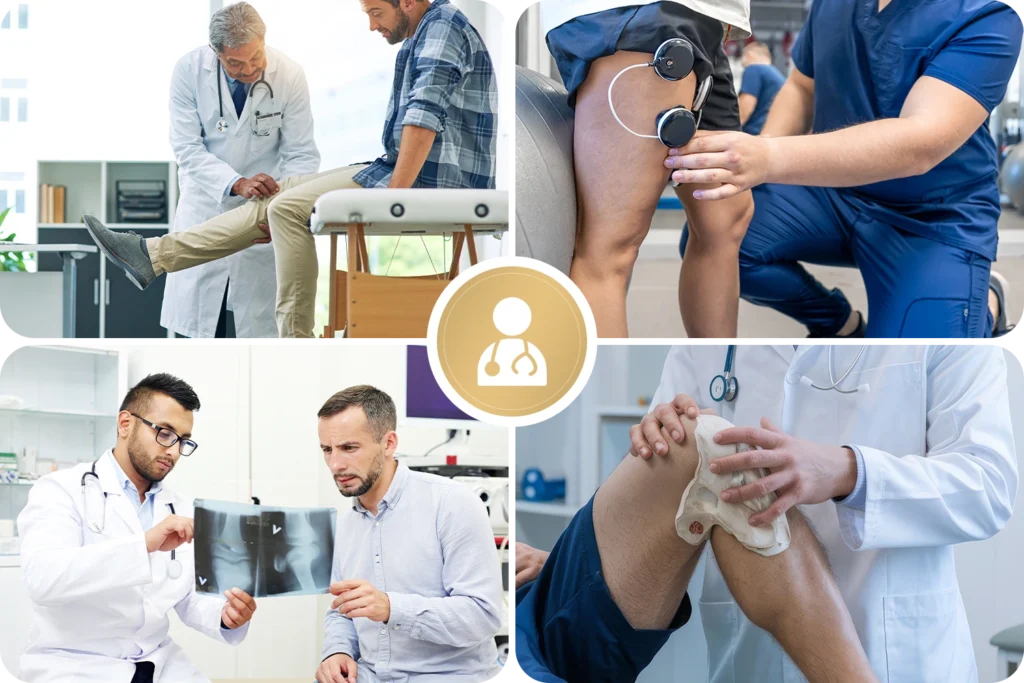
PRP outcomes depend heavily on preparation, dose, and injection accuracy details that vary widely between providers. Because I’m a practicing orthopedic surgeon evaluating your imaging and exam findings directly, the PRP protocol you receive is matched to your specific diagnosis, not a standardized kit run the same way for every patient who walks in the door.

PRP therapy is individualized based on a comprehensive orthopedic evaluation. While PRP is widely used in orthopedic and sports medicine practice, it is not FDA-approved as a treatment for any specific condition, and its use here is based on clinical judgment and the available evidence for your particular diagnosis. Individual outcomes vary, and no specific result or recovery timeline can be guaranteed. A physician-patient relationship is established only after consultation and informed consent.
Cortisone reduces inflammation and pain temporarily but doesn’t support tissue repair, and repeated use can weaken tendon and cartilage over time. PRP is intended to support the tissue’s own healing process rather than simply suppress inflammation.
It depends on the condition being treated. Some patients see meaningful improvement from a single injection; others, particularly with more advanced arthritis or chronic tendinopathy, benefit from a short series. I’ll recommend a specific plan based on your diagnosis rather than a generic package.
Most patients describe pressure or soreness rather than sharp pain, particularly with ultrasound guidance placing the injection precisely. Soreness for a few days afterward is common and expected.
PRP works by triggering a biologic healing response, so it’s typically gradual rather than immediate most patients notice improvement over several weeks, with continued benefit for some conditions over a few months.
Yes, in select cases. For example, PRP delivered both intra-articularly and intraosseously is sometimes used together for more advanced joint degeneration, and PRP can be used alongside BMAC or applied during surgery. I’ll walk you through whether combination treatment makes sense for your case.
PRP is generally not covered by insurance and is offered as a self-pay treatment. My office can walk you through cost and payment options during your consultation.