
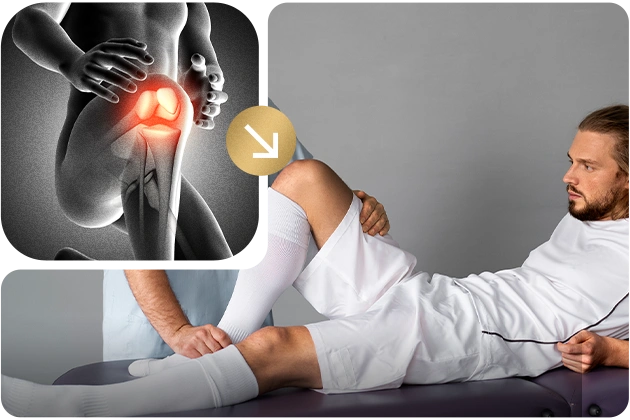
Dr. Ceballos Dual Board-Certified Orthopedic Surgeon & Sports Medicine Specialist
Not every knee with osteoarthritis needs a replacement some need the load taken off the damaged part of the joint. For patients with arthritis isolated to the medial (inner) compartment of the knee, the MISHA Knee System offers a way to do exactly that: offload the damaged compartment mechanically, without removing bone or replacing the joint. I was the first Miami-Dade physician trained in this system, and I offer it as one option within a broader joint-preservation strategy not a stand-alone gadget disconnected from the rest of your care.
This is a mechanical intervention, not a biologic one, and it’s most powerful when combined with the rest of what a joint-preservation evaluation offers: an accurate diagnosis of exactly where and how advanced the arthritis is, and a decision about whether MISHA, biologics, or eventually replacement is the right tool for your specific knee.
MISHA is a small, implantable shock absorber placed alongside the knee, outside the joint itself. It works like a joint-preserving suspension system absorbing a portion of the load that would otherwise pass through the damaged medial compartment with every step, reducing the mechanical stress driving the arthritis forward, without altering the joint surfaces themselves.
MISHA is designed specifically for patients with osteoarthritis isolated to the medial compartment of the knee it is not appropriate for arthritis affecting the lateral compartment, the kneecap (patellofemoral) joint, or more advanced, diffuse degeneration. Confirming that your arthritis pattern actually fits this specific profile, through exam and imaging, is the first and most important step before MISHA is ever discussed as an option.
Partial and total knee replacement address arthritis by resurfacing or replacing the damaged joint surfaces. MISHA doesn’t touch the joint surface at all it changes the mechanical load passing through the joint from the outside. That distinction matters for recovery, activity expectations, and what remains possible later: MISHA doesn’t consume bone stock or joint surface the way replacement does, which means replacement generally remains an option down the road if it’s ultimately needed.

MISHA is implanted through a minimally invasive surgical approach, positioned alongside the knee rather than inside the joint. The procedure is more involved than an in-office injection but considerably less extensive than a knee replacement I’ll walk you through the specific surgical details, anesthesia approach, and expected time in the operating room during your evaluation.

Recovery from MISHA implantation is generally shorter and less restrictive than recovery from partial or total knee replacement, though it’s still a surgical procedure with its own rehabilitation timeline. Most patients progress through a structured return to activity over several weeks, guided by how the knee is healing rather than a fixed calendar. I’ll set specific expectations for your case based on your baseline activity level and the surgical findings.

For appropriately selected patients, MISHA can be combined with PRP, BMAC, or cellular therapy as part of a broader joint-preservation plan addressing both the mechanical load on the joint and the biologic healing environment inside it. This isn’t automatic for every MISHA patient; it’s a decision made based on what your evaluation shows about the joint beyond the mechanical alignment issue alone.
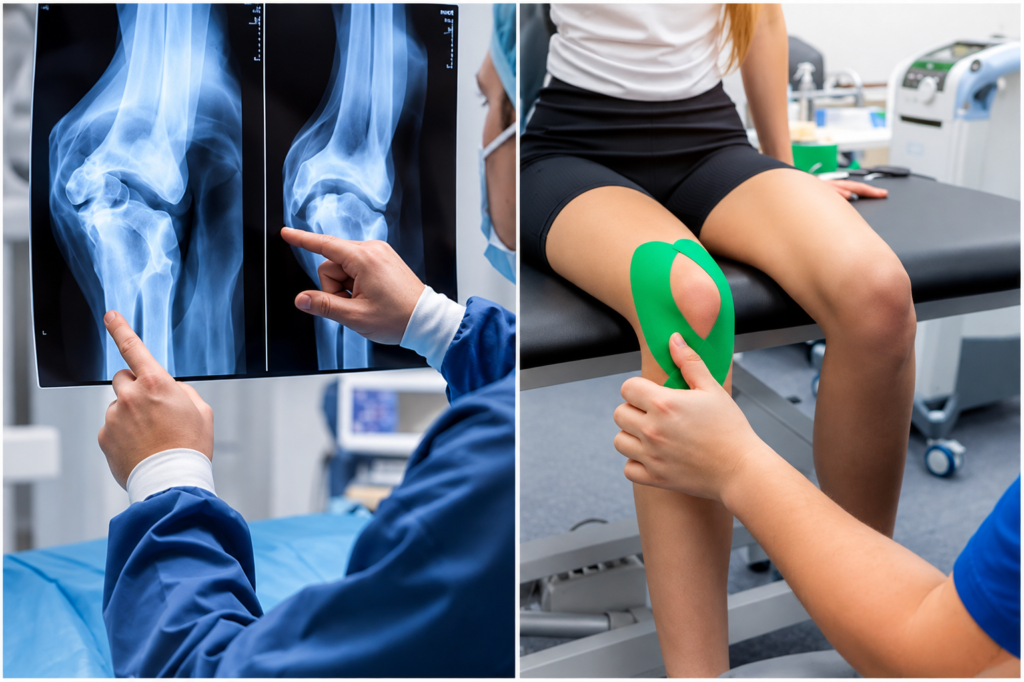
MISHA isn’t the answer for every arthritic knee, and I’ll tell you directly when it isn’t. Arthritis involving more than the medial compartment, more advanced joint damage, or significant deformity beyond what MISHA is designed to offload generally point toward a different approach continued biologic and preservation strategies, or, when genuinely appropriate, partial or total knee replacement.
I was the first Miami-Dade physician trained in the MISHA Knee System, and I evaluate every candidate within the context of a full joint-preservation strategy not as an isolated procedure offered in place of a real evaluation. Because I also perform the biologic therapies and, when necessary, joint replacement, the decision of whether MISHA is genuinely the right fit for your knee is made with the full picture in view.

The MISHA Knee System is appropriate only for a specific pattern of knee osteoarthritis isolated to the medial compartment, confirmed through comprehensive evaluation and imaging. It is not appropriate for lateral compartment, patellofemoral, or more advanced diffuse arthritis. As with any surgical procedure, individual outcomes vary and specific results cannot be guaranteed. A physician-patient relationship is established only after consultation and informed consent.
Candidacy depends on your arthritis being isolated to the medial compartment of the knee, confirmed through exam and imaging. Not every knee with arthritis qualifies I’ll give you a direct answer after a full evaluation.
No. Partial replacement resurfaces the damaged part of the joint. MISHA is placed alongside the knee and offloads it mechanically without touching the joint surface itself.
Generally, yes. Because MISHA doesn’t consume bone stock or joint surface the way replacement does, it’s designed to leave that option available later if your knee’s condition ultimately progresses to that point.
Recovery is generally shorter and less restrictive than knee replacement, though it’s still a surgical procedure with its own timeline. I’ll set specific expectations based on your case during your evaluation.
In appropriately selected patients, yes addressing both the mechanical and biologic sides of the joint. Whether that combination makes sense for you depends on what your full evaluation shows.
Then MISHA isn’t the right fit, and I’ll tell you directly. We’d discuss other joint-preservation options or, if genuinely appropriate, partial or total knee replacement instead.