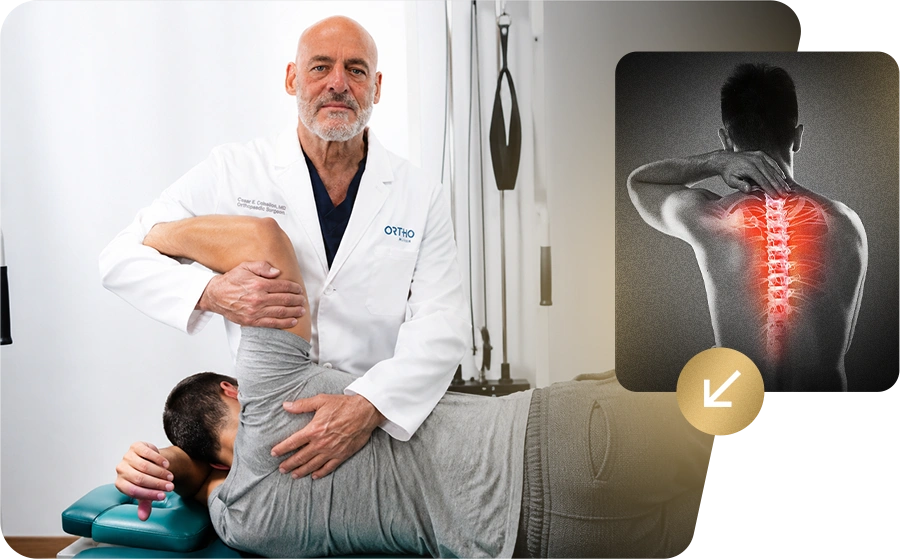
Dr. Ceballos Dual Board-Certified Orthopedic Surgeon & Sports Medicine Specialist
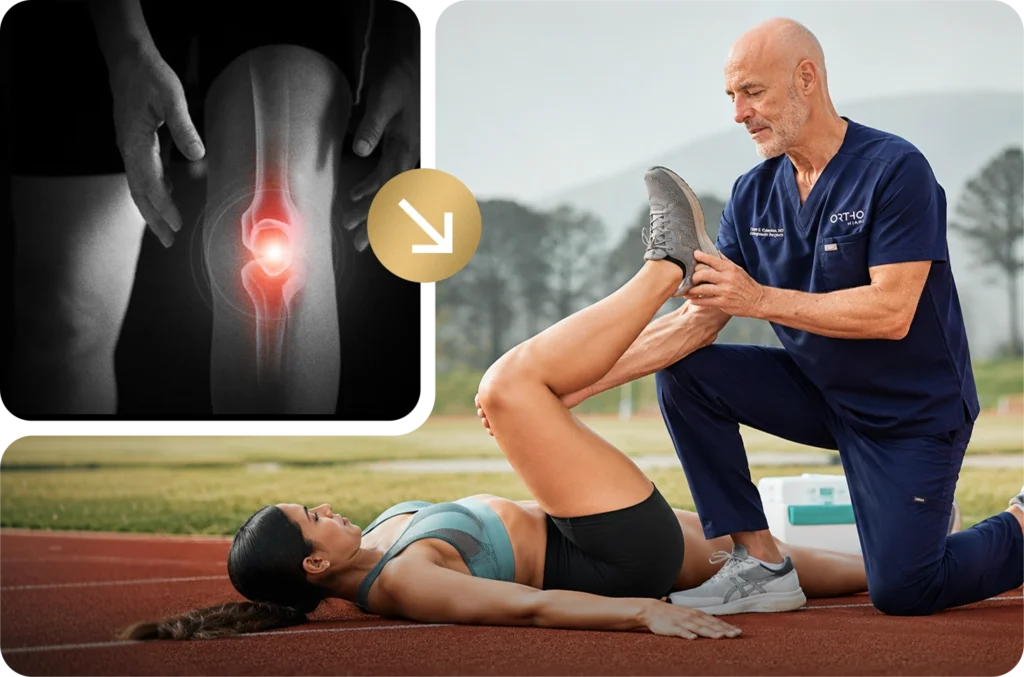
Sports medicine, done well, is about more than treating the injury in front of you it’s about understanding the demands of your sport, your position, and your competitive timeline, and building a treatment plan around getting you back to all three. As a dual board-certified orthopedic surgeon and sports medicine specialist, I treat athletes and active adults across every level, from weekend competitors to collegiate and professional athletes.
Whether the problem is an acute tear or a slow-building overuse pattern, the same approach applies: an accurate diagnosis first, then a treatment plan matched to the tissue, the sport, and your goals not a generic protocol applied to every athlete who walks in.
Sports injuries generally fall into two categories, and they’re evaluated differently. Acute injuries a twisted knee, a dislocated shoulder, a sudden tear need a fast, accurate diagnosis to avoid losing time to a wrong initial treatment plan. Overuse injuries tendinopathy, stress reactions, chronic joint irritation build gradually and often need a closer look at training load and mechanics, not just the painful area itself, to keep the problem from recurring once you’re back.
These three joints account for the majority of the sports injuries I treat, each with its own common injury patterns tied to specific sports and movements cutting and pivoting sports for the knee, overhead and contact sports for the shoulder, and throwing or repetitive-load sports for the elbow. Diagnosis and treatment are tailored to the joint and the specific demands your sport places on it.
These are among the most common significant sports injuries I see, and each has a range of treatment options depending on severity, age, and activity goals from nonoperative management and structured rehabilitation, to arthroscopic repair, to reconstruction when the tissue and tear pattern require it. For young athletes with ACL injuries and open growth plates, non-operative preservation through the Cross Bracing Protocol may be an option see the dedicated Pediatric & Adolescent ACL page for detail.
Strains, sprains, and tendinopathy are treated based on grade and location, with a rehabilitation and, where appropriate, orthobiologic-supported plan built around your specific sport’s demands. A tendon injury in a thrower and the same tendon injury in a runner don’t necessarily get the same return-to-play timeline or rehabilitation emphasis.
Baseball places a uniquely repetitive stress on the shoulder and elbow that general sports medicine care doesn’t fully address. UCL injuries, Little League shoulder and elbow, and throwing-specific rotator cuff and labral pathology get their own dedicated program full detail, including return-to-throw progressions, lives on the Baseball Injuries page.
UCL injuries range from partial sprains that respond to nonoperative care and biologic augmentation, to complete tears requiring reconstruction. Determining which category a given injury falls into and what that means for a throwing athlete’s timeline is one of the more consequential diagnostic decisions in sports medicine, and it’s covered in full on the Baseball Injuries page.
PRP and other orthobiologics are used selectively to support recovery from tendon, ligament, muscle, and select joint injuries in athletes, chosen based on what the evaluation shows rather than applied as a routine add-on to every injury. Full detail on how these therapies are dosed and delivered lives on the PRP Therapy and Stem Cell & Cellular Therapies pages.
Getting back on the field isn’t just about the injury healing it’s about confirming strength, mobility, and sport-specific movement patterns are actually ready for competition again. I build a structured return-to-play plan for every significant injury, coordinated with your athletic trainer, physical therapist, or coaching staff where applicable, rather than clearing return based on pain alone.
I work with athletes competing at the collegiate and professional level, where the stakes around diagnosis, timeline, and return-to-play decisions are higher and often involve coordination with team medical staff, athletic trainers, and governing-body eligibility rules. This level of care draws on the same evaluation and treatment approach used for every patient, applied with the added coordination competitive athletics requires.
For athletes who’ve been given a diagnosis or treatment recommendation elsewhere and want a second, direct evaluation before committing to a plan particularly before surgery I offer focused second-opinion consultations, including a review of prior imaging and records.
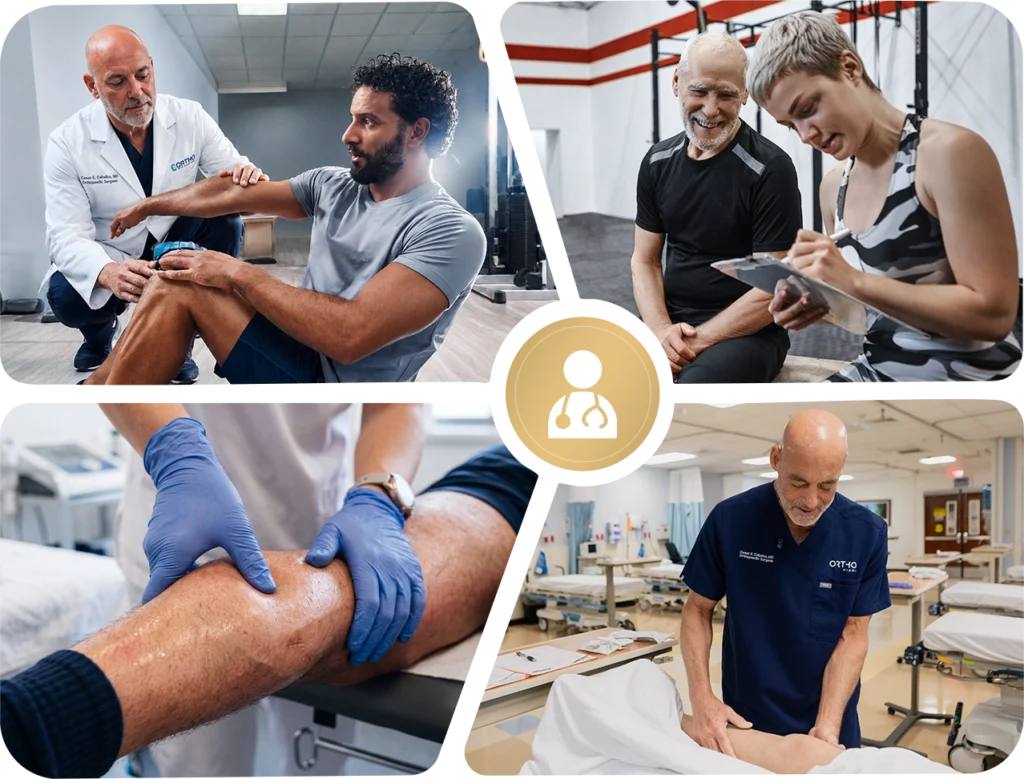
Because I perform the direct evaluation including needle arthroscopy when indicated the orthobiologic treatments, and the surgical repairs myself, your sports medicine care doesn’t get split across a surgeon, a separate injection clinic, and a rehab provider who aren’t coordinating with each other. One relationship manages the diagnosis, the treatment, and the return-to-play plan.

Sports medicine treatment plans, including orthobiologic therapies referenced on this page, are individualized based on a comprehensive evaluation. Some biologic therapies are investigational and not FDA-approved for specific orthopedic indications; full disclosures are provided on the relevant treatment pages. Return-to-play timelines vary by injury and individual and cannot be guaranteed. A physician-patient relationship is established only after consultation and informed consent.
Yes. While many of my patients are competitive athletes, sports medicine principles accurate diagnosis, activity-focused treatment, structured return-to-activity planning apply just as well to active adults who aren’t competing but want to stay active.
Acute injuries are prioritized for prompt evaluation, since an early accurate diagnosis often changes the treatment plan and can shorten the overall timeline. Contact the office directly for urgent scheduling.
Not necessarily. Many sports injuries respond well to nonoperative treatment rehabilitation, activity modification, and, where appropriate, orthobiologics. When surgery genuinely is the better option, I’ll tell you directly and explain why.
Yes, where applicable, particularly for collegiate and professional athletes. Coordinated care between your treating physician and your team’s medical staff generally produces a smoother return-to-play process.
Sports Medicine covers the full range of acute and overuse injuries across sports. Baseball Injuries is a sport-specific deep dive into throwing-related shoulder and elbow care. Athletic Recovery & Longevity is a longer-term, physician-directed program for athletes focused on career longevity across seasons, not a single injury episode.